Raw shilajit collected from Himalayan rock faces is not immediately safe for human consumption. In its unprocessed state, it may contain rock debris, plant material, microbial organisms, and heavy metals at concentrations that require reduction before supplemental use. Purification is not a diminishment of shilajit — it is the necessary step that makes authentic shilajit both safe and more bioavailable than the raw exudate.
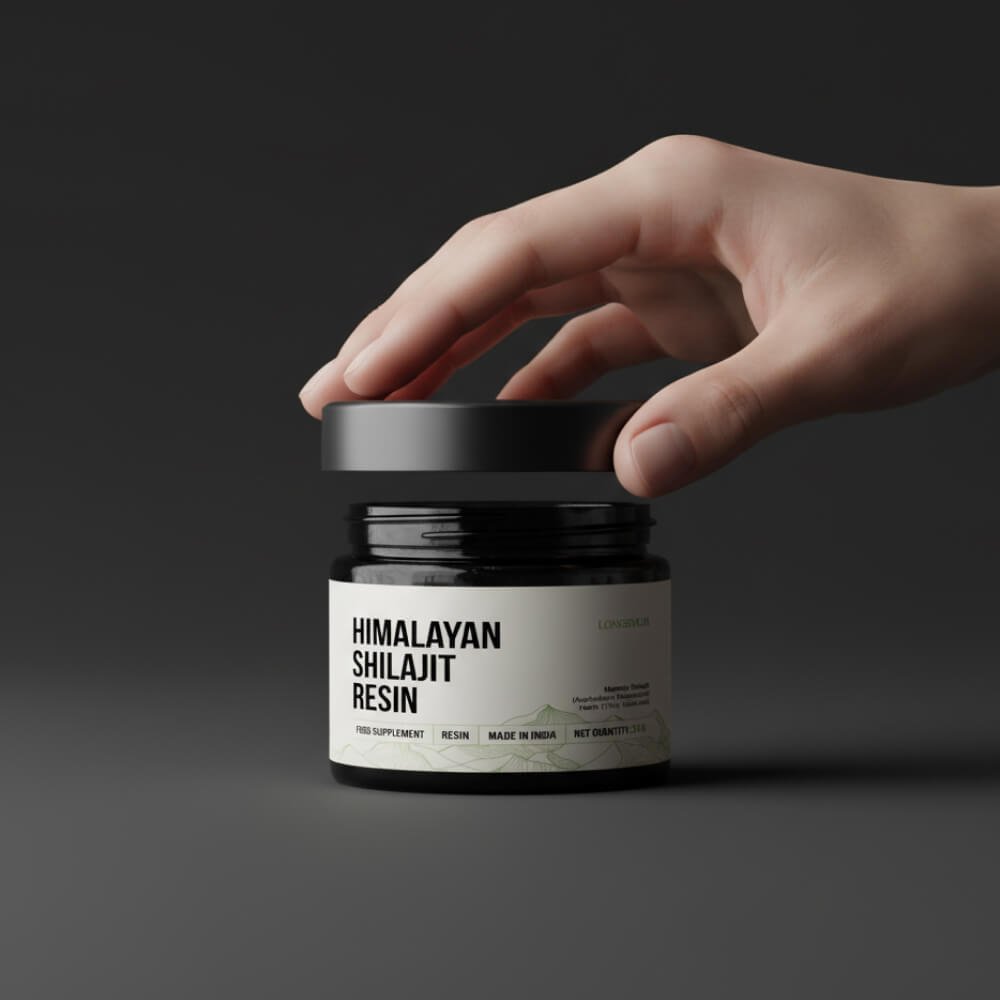
This page explains the purification process in detail: both the traditional Ayurvedic method and the modern analytical approach used to verify safety. For testing documentation, visit our research and testing page. For our product, see our Himalayan Shilajit Resin page.
Why Raw Shilajit Requires Purification
The raw exudate that emerges from mountain rock faces contains:
- Insoluble rock particles: Quartz, mica, and other mineral fragments that are physiologically inert but mechanically irritating
- Organic debris: Decomposed plant material, insect matter, and other biological material from the collection environment
- Microbial organisms: Environmental bacteria and fungi present in the high-altitude collection environment
- Heavy metals: Lead, arsenic, mercury, and cadmium at levels that may require reduction to meet safety standards
- Potentially harmful organic compounds: Some raw shilajit samples contain free radicals and oxidised compounds that purification reduces
The goal of purification is to selectively remove these contaminants while preserving the bioactive compounds that make shilajit valuable: fulvic acid, humic acid, dibenzo-α-pyrones, and trace minerals in their ionic form.
Traditional Ayurvedic Purification (Shodhana)
The Ayurvedic purification process for shilajit, known as shodhana, has been described in classical texts and refined through centuries of pharmaceutical practice. The traditional method involves:
- Initial sorting: Removal of visible large impurities by hand — stones, organic debris, discoloured material
- Dissolution: Raw shilajit is dissolved in a large volume of water, typically spring or river water from a clean source. Stirring assists dissolution of the water-soluble components
- Filtration: The solution is filtered through progressively finer cloth layers, removing insoluble particles while retaining the dissolved bioactive material in the filtrate
- Evaporation and concentration: The filtrate is evaporated under sun heat (traditionally) or gentle controlled heat, concentrating the dissolved shilajit components into a thick resin
- Optional herbal processing: Some traditional formulations involve repeated dissolution and evaporation with specific herbal extracts (triphala, ghee) believed to further purify and potentiate the substance
This aqueous extraction approach works because shilajit’s bioactive compounds — fulvic acid, humic acid, mineral chelates, DBPs — are water-soluble, while the most problematic contaminants (rock particles, some heavy metal compounds) are either insoluble or partially removed through repeated filtration cycles.
Modern Purification and Quality Control
Modern shilajit production builds on the traditional approach with analytical testing at multiple stages:
- Raw material testing: Incoming raw shilajit is tested for baseline heavy metal levels and microbial load before processing begins. High-contamination batches are rejected at this stage
- Aqueous extraction: Large-scale dissolution in purified water using controlled temperature and pH conditions to maximise bioactive compound extraction
- Multi-stage filtration: Industrial filtration systems with progressively finer mesh sizes (down to micron-level filtration) remove insoluble particles and reduce microbial load
- Concentration under controlled conditions: Evaporation at controlled temperature (below 60°C to preserve thermally sensitive DBPs) concentrates the extract into the final resin consistency
- Post-processing testing: The finished product is tested for fulvic acid content, heavy metals, and microbial safety before packaging
- Third-party verification: ISO-accredited laboratory testing provides independent confirmation of the finished product’s compliance
What Purification Does and Does Not Remove
| Substance | Effect of Purification |
|---|---|
| Rock particles and grit | Removed by filtration |
| Organic debris | Removed by filtration |
| Microbial organisms | Significantly reduced by filtration and heat |
| Heavy metals (insoluble forms) | Substantially reduced by filtration |
| Fulvic acid | Retained (water-soluble, passes through filtration) |
| Humic acid | Largely retained |
| Dibenzo-α-pyrones | Retained if temperature controlled properly |
| Ionic trace minerals | Retained in fulvate-chelated form |
How to Identify Properly Purified Shilajit
Beyond laboratory testing, a few practical indicators suggest good purification:
- Complete dissolution in warm water without visible residue
- No gritty texture when the resin is rolled between fingers
- Published, verifiable third-party CoA showing heavy metal compliance
- Clear fulvic acid percentage statement — a product that has not been properly processed will not have a high fulvic acid content
For full testing documentation on our product, visit our research and testing page.
References
- Acharya SB et al. (1988). Pharmacological actions of Shilajit. Indian J Exp Biol, 26(10).
- Meena H et al. (2010). Shilajit: A panacea for high-altitude problems. IJAR, 1(1).
- Ghosal S (1990). Chemistry of Shilajit. Pure and Applied Chemistry, 62(7).