Heavy metal contamination is the primary safety concern associated with shilajit supplements, and it is entirely preventable with appropriate sourcing, purification, and third-party testing. This page explains why heavy metals occur in shilajit, which metals are tested for, what safe concentration thresholds look like, and how to verify that a specific product is compliant.
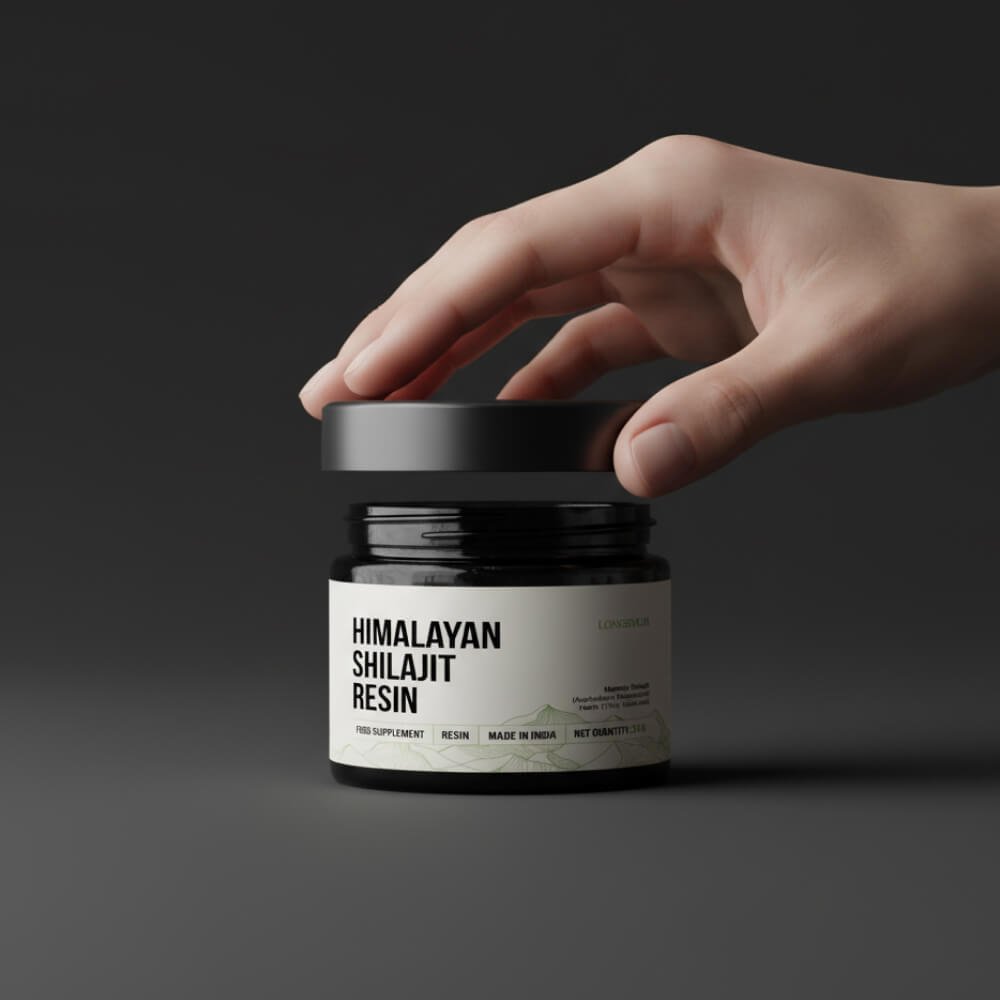
For the full testing framework, see our research and testing page. For our tested product, visit our Himalayan Shilajit Resin page.
Why Shilajit Can Contain Heavy Metals
Shilajit forms in rock formations over centuries, absorbing minerals from its geological substrate through its natural chelation chemistry. The same fulvic acid and humic acid that make shilajit valuable as a mineral-delivery system also absorb heavy metals present in the surrounding rock. Lead, arsenic, mercury, and cadmium occur naturally in geological formations — particularly in older, deep rock strata — and can be incorporated into shilajit during its formation.
Heavy metal content in raw shilajit varies significantly by collection site altitude and geology. High-altitude Himalayan sites above 3,500 metres, in geologically ancient, pollution-free areas, tend to have lower baseline heavy metal content than lower-altitude or industrially affected sites. However, even high-altitude raw shilajit typically requires purification to bring heavy metal levels within safe supplemental ranges.
The Four Primary Heavy Metals to Test For
Lead (Pb)
Lead is the heavy metal of greatest concern in supplement safety due to its cumulative neurotoxic effects. There is no safe biological level of lead exposure — it accumulates in bone and soft tissue and affects the nervous system, particularly in children and over long periods in adults. The European Food Safety Authority (EFSA) and other regulatory bodies have established benchmark values for dietary lead exposure. For food supplements, responsible testing targets lead levels below 0.5 ppm (parts per million) in the final product.
Arsenic (As)
Inorganic arsenic is a Group 1 carcinogen (confirmed human carcinogen) at chronic exposure levels. Organic arsenic — naturally present in seafood and some plants — is considered significantly less toxic. Testing for arsenic in shilajit should specify inorganic arsenic specifically, not total arsenic. Safe thresholds for inorganic arsenic are typically below 1.0 ppm in food supplements per EU regulations.
Mercury (Hg)
Mercury, particularly methylmercury, is a potent neurotoxin. In shilajit, mercury contamination can come from geological mercury deposits in rock formations. The acceptable limit for mercury in food supplements is typically below 0.1 ppm. This is a particularly strict threshold reflecting mercury’s bioaccumulative toxicity.
Cadmium (Cd)
Cadmium accumulates primarily in the kidneys and liver and has nephrotoxic (kidney-damaging) effects with chronic exposure. Safe thresholds for cadmium in food supplements are typically below 0.3 ppm. Cadmium is a particular concern for lower-altitude shilajit from agriculturally active regions where cadmium from fertilisers can enter soil and rock formations.
How Heavy Metal Testing Is Performed
The standard analytical method for heavy metal testing in supplements is Inductively Coupled Plasma Mass Spectrometry (ICP-MS). This technique vaporises the sample in a plasma torch at approximately 8,000°C and separates the resulting ions by mass, allowing detection and quantification of individual elements at concentrations down to parts per trillion (ppt).
ICP-MS is performed by accredited analytical laboratories with ISO 17025 certification. Testing by an ISO-accredited facility is the only credible basis for safety claims — internal testing by a manufacturer cannot be considered independent verification. Any shilajit brand claiming safety without an ISO-accredited third-party CoA (certificate of analysis) for heavy metals cannot substantiate that claim.
Reading a Heavy Metal Certificate of Analysis
A legitimate heavy metal CoA for shilajit should include:
- Name and accreditation number of the testing laboratory
- Batch or lot number linking the test to a specific product batch
- Individual results for lead, arsenic (inorganic), mercury, and cadmium in ppm or mg/kg
- Pass/fail notation against stated specification limits
- Date of analysis and analyst signature
Results reported only as “below detectable limits” without specific method detection limits stated are less informative — a method detection limit above the safe threshold would make such a result meaningless. Specific numerical values with stated measurement uncertainty are the gold standard.
Our Testing Commitment
Every batch of our Himalayan Shilajit Resin is tested for lead, arsenic (total and inorganic), mercury, and cadmium by an ISO-accredited third-party laboratory before release for sale. Results are available on request. All batches must comply with EU food supplement safety standards before release.
We believe this level of transparency should be the industry baseline, not the exception. For the full testing overview, see our research and testing page.
References
- EFSA (2014). Dietary exposure to inorganic arsenic in the European population. EFSA Journal.
- EFSA (2010). Lead in food. EFSA Journal, 8(4), 1570.
- WHO (2011). Evaluation of certain food additives and contaminants. WHO Technical Report Series, 960.