Fulvic acid occurs in a number of natural environments, but sources vary significantly in concentration, purity, and the complexity of the accompanying chemical matrix. Understanding where fulvic acid comes from — and how different sources compare — is important context for evaluating shilajit and other fulvic acid supplements.
For the science behind what fulvic acid does, see our fulvic acid overview page. For our tested product, visit the Himalayan Shilajit Resin page.
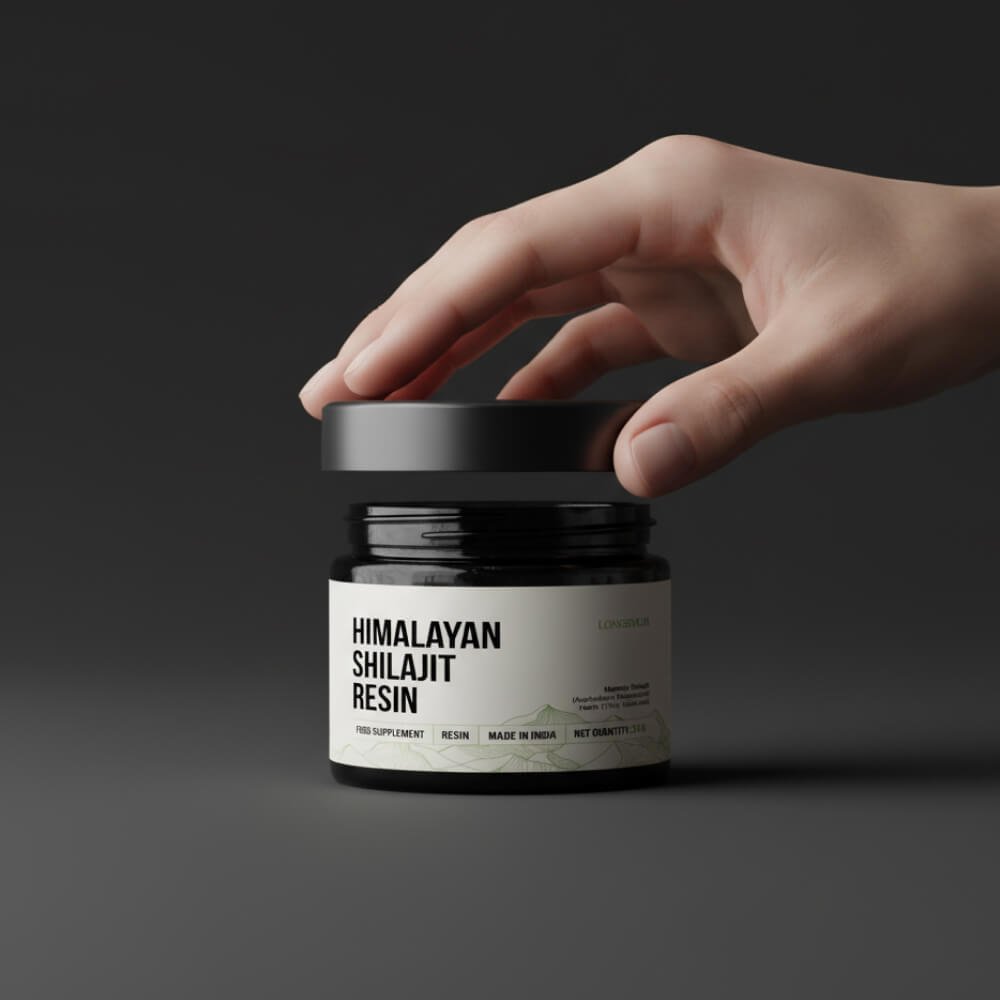
1. Himalayan Shilajit Resin
Typical fulvic acid content: 15–60% by dry weight
Himalayan Shilajit is the richest natural source of fulvic acid known. High-grade resin from above 3,500 metres can contain up to 60% fulvic acid by dry weight — a concentration unmatched by any other natural source. This extraordinary concentration reflects the centuries-long formation process in which organic material is repeatedly transformed and mineralised in a geological pressure environment. The resulting fulvic acid is deeply mineralised and accompanied by the unique dibenzo-α-pyrone compounds that are not present in other fulvic acid sources.
Shilajit is also distinct because its fulvic acid is found in a complete natural matrix — alongside humic acid, trace minerals, and DBPs — rather than as an isolated extract. This matrix effect may contribute to its biological activity in ways not captured by isolated fulvic acid preparations. Our research and testing page details how fulvic acid content is verified in our product.
2. Leonardite
Typical fulvic acid content: 5–20% by dry weight (varies widely)
Leonardite is a form of oxidised lignite — a soft coal-like substance formed from ancient plant material at an earlier stage of coalification than hard coal. It is widely used in agriculture as a soil amendment and is the most common commercial source of humic and fulvic acid supplements sold independently of shilajit.
Leonardite-derived fulvic acid shares the basic chemistry with shilajit-derived fulvic acid — carboxyl, hydroxyl, and carbonyl functional groups — but differs in its specific molecular structure and does not contain dibenzo-α-pyrones or the Himalayan trace mineral profile characteristic of authentic shilajit. Leonardite products can vary enormously in quality depending on the source deposit, extraction method, and standardisation. The absence of dibenzo-α-pyrones means leonardite cannot replicate the full activity profile of shilajit.
Commercial Fulvic Acid Supplement Products
Most standalone “fulvic acid” or “fulvic minerals” supplements on the market are derived from leonardite rather than from shilajit. Some are legitimate and provide a reasonable fulvic acid concentration; others are highly diluted or poorly standardised. These products are not equivalent to authentic shilajit and should not be compared directly.
3. Peat
Typical fulvic acid content: 2–10% by dry weight
Peat is partially decomposed plant material that forms in waterlogged environments — wetlands, bogs, and fens. It represents an earlier stage of organic transformation than leonardite and contains humic substances including fulvic acid, but at lower concentrations and with a different chemical profile. Peat-derived humic substances have been studied for soil amendment applications and some biomedical research, but peat is not generally considered a practical fulvic acid supplement source due to quality and standardisation challenges.
4. Humus-Rich Soil
Typical fulvic acid content: 0.1–2% (highly variable)
Surface soil humus contains fulvic acid as part of its organic fraction. Dark, humus-rich soils — forest floors, prairie soils, and well-composted garden soils — have the highest concentrations. However, concentrations are far too low for soil to be a practical supplement source, and soil obviously comes with extensive contamination concerns. Some researchers have studied soil microbiome-derived humic substances, but this remains a research-stage area rather than a supplement application.
5. Some Plant Foods
Fulvic acid content: Trace amounts, highly variable
Root vegetables grown in humus-rich soils can contain trace amounts of fulvic acid absorbed from the soil. Organic produce from mineral-rich soils theoretically contains slightly more humic-derived compounds than conventionally grown produce on depleted soils. However, the concentrations are orders of magnitude lower than those in shilajit or leonardite-based supplements and are not practically significant as a supplementation route.
6. Some Natural Spring Waters
Fulvic acid content: Trace (typically below 5 mg/L)
Spring waters that flow through humus-bearing geological formations can contain trace fulvic acid. Some traditionally revered mineral springs may have contributed their health reputation partly through this route, but concentrations are not supplementally relevant.
Why Himalayan Shilajit Stands Apart
The comparison across natural sources makes clear that Himalayan Shilajit is in a category of its own for fulvic acid concentration and complexity. No other natural source comes close to the 15–60% fulvic acid content of high-grade Himalayan resin, and no other source provides the complete shilajit matrix — with its dibenzo-α-pyrone biomarkers, Himalayan trace mineral profile, and centuries-long geological formation history.
This is why shilajit resin from a verified, high-altitude Himalayan source, tested for fulvic acid content, remains the gold standard delivery mechanism for fulvic acid nutrition. Explore our Himalayan Shilajit Resin or review the full research context on our research and testing page.