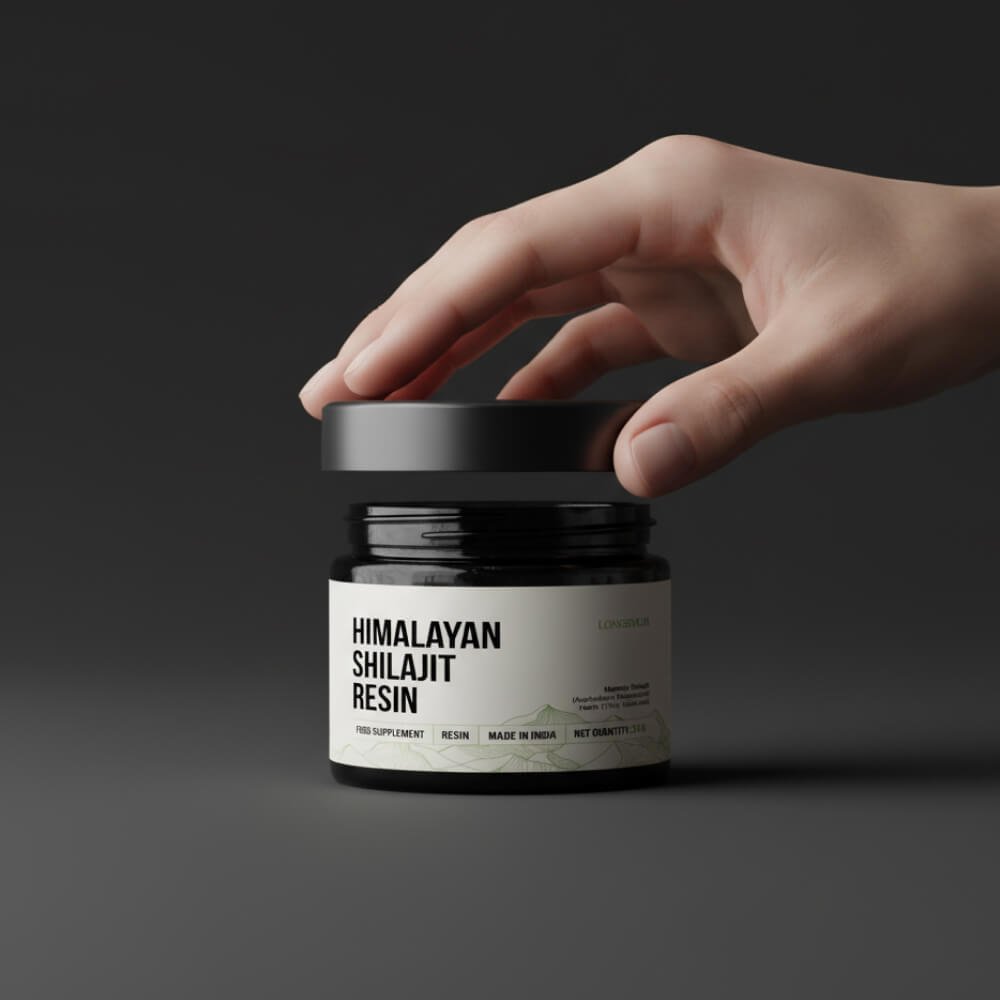
Fulvic acid is one of the most scientifically interesting compounds in the natural world — and it is the primary bioactive constituent of authentic Himalayan Shilajit. Understanding fulvic acid means understanding much of what makes shilajit worth discussing in a health context at all. This guide covers fulvic acid comprehensively: its chemistry, its natural formation, its documented biological activities, and its relationship to the shilajit supplement.
For quality standards related to fulvic acid testing, see our research and testing page. To explore our shilajit product, visit the Himalayan Shilajit Resin page.
Defining Fulvic Acid: The Chemistry
Fulvic acid is a member of the humic substance family — a class of complex organic compounds that form through the biological degradation of plant and animal matter. Within the humic substances, fulvic acid represents the lowest-molecular-weight fraction, typically with a molecular weight of less than 1,000 Daltons. This small size is fundamental to its biological activity: fulvic acid molecules are small enough to cross cell membranes and enter intracellular space — a capability that larger humic acid molecules lack.
Structurally, fulvic acid is characterised by a high density of oxygenated functional groups: carboxyl groups (–COOH), hydroxyl groups (–OH), carbonyl groups (C=O), and quinone groups. These groups give fulvic acid its key properties: strong chelating ability (capacity to bind metal ions), electron-donating and electron-accepting capacity (antioxidant activity), and amphiphilic character (partly water-soluble, partly lipid-compatible).
Fulvic acid is yellow to orange in colour — the golden colour that shilajit imparts to warm water when dissolved is primarily from its fulvic acid content. Interestingly, fulvic acid from different sources varies in structure depending on the parent material and microbial community involved in its formation. Shilajit-derived fulvic acid, formed over centuries in geological rock formations, has a distinctive profile that differs from soil-derived or leonardite-derived fulvic acid products.
How Fulvic Acid Forms Naturally
Fulvic acid forms through a process called humification — the long-term microbial degradation of organic matter. When plant and microbial material decomposes under aerobic and anaerobic conditions, complex biological polymers (lignin, cellulose, proteins) are progressively broken down by fungi, bacteria, and chemical weathering. The intermediate and final products of this process include humic and fulvic acids.
In soil, this process takes decades to centuries. In the rock formations of the high Himalayas — where shilajit forms — the process takes centuries to millennia, under conditions of geological pressure and mineral saturation. The resulting fulvic acid is more mineralised and more chemically complex than that formed in ordinary surface soils. See our how shilajit forms page for the full geological context.
Where Fulvic Acid Is Found
Fulvic acid occurs naturally in:
- Shilajit resin (Himalayan, Altai, Caucasus) — highest concentrations of any known natural source, typically 15–60%
- Humus-rich soils — present in topsoil, particularly in undisturbed forests and grasslands
- Leonardite — a form of oxidised lignite coal used commercially to produce humic and fulvic acid products
- Peat and lignite deposits — geological organic matter at various stages of transformation
- Some mineral spring waters — in trace concentrations from contact with humus-bearing strata
For a comprehensive overview of all natural sources, see our fulvic acid natural sources page. It is worth noting that shilajit-derived fulvic acid and leonardite-derived fulvic acid are not chemically identical and should not be treated as equivalent.
Fulvic Acid as a Mineral Transporter
One of fulvic acid’s most well-documented activities is its capacity to chelate (bind to) mineral ions and facilitate their transport into cells. The multiple carboxyl and hydroxyl groups on a single fulvic acid molecule allow it to form stable complexes with positively charged metal ions (cations) including iron, magnesium, zinc, calcium, and manganese. These complexes are known as fulvate chelates.
Fulvate chelates are small enough to pass through intestinal wall cells and, potentially, cellular membranes. This mechanism is proposed as an explanation for why shilajit’s minerals show high bioavailability — the fulvic acid acts as a carrier system, delivering mineral ions in a pre-chelated form that the body can absorb more readily than inorganic mineral salts.
The mineral transport mechanism is examined in detail on our fulvic acid mineral transport page.
Antioxidant Properties
Fulvic acid is a potent free radical scavenger. Its quinone functional groups can donate electrons to neutralise reactive oxygen species (ROS) — highly reactive molecules that cause cellular oxidative damage. In laboratory studies, fulvic acid from shilajit demonstrates antioxidant activity comparable to established antioxidant compounds.
Agarwal et al. (2011) measured the antioxidant capacity of fulvic acid fractions from shilajit using DPPH (2,2-diphenyl-1-picrylhydrazyl) and FRAP (ferric reducing antioxidant power) assays and found significant free radical scavenging activity that correlated with fulvic acid concentration. This finding has been replicated in multiple laboratory analyses and supports fulvic acid percentage as a proxy for overall antioxidant capacity of a shilajit product.
Cognitive Research on Fulvic Acid
Perhaps the most striking research on shilajit-derived fulvic acid concerns its potential role in cognitive health. Carrasco-Gallardo et al. (2012) demonstrated in cell culture models that fulvic acid significantly inhibited the aggregation of tau protein — a key pathological process in Alzheimer’s disease and other tauopathies. The same study found that fulvic acid could disaggregate existing tau filaments, suggesting both preventive and potentially therapeutic activity in the relevant disease model.
The proposed mechanism involves fulvic acid’s interaction with the electron-rich domains of tau proteins, interrupting the electrostatic and hydrophobic forces that drive protein aggregation. This is an in vitro finding requiring clinical validation — but it has attracted substantial interest from researchers studying natural compounds in neurodegeneration. The detailed research is reviewed on our fulvic acid research page.
Fulvic Acid vs. Humic Acid: The Key Differences
Fulvic acid and humic acid are closely related but differ in molecular weight, solubility, and bioavailability. Fulvic acid has a lower molecular weight, is fully water-soluble across a wide pH range, and is small enough to penetrate cells. Humic acid has a higher molecular weight, is less soluble at low pH, and is not considered significantly bioavailable. A comprehensive comparison is available on our fulvic acid vs humic acid page.
Fulvic Acid Content as a Quality Indicator
In the shilajit supplement industry, fulvic acid percentage by dry weight is the primary quality marker used by both buyers and quality-conscious manufacturers. High-grade shilajit should contain at least 20% fulvic acid; the best Himalayan sources show 40–60%. Products that do not publish a fulvic acid percentage cannot be assessed for potency and should be viewed with caution.
Measurement is performed by spectrophotometric methods following alkaline extraction and acidification — a standardised analytical procedure. Our product’s fulvic acid content is confirmed by third-party laboratory analysis; documentation is available via our research and testing page.
References
- Agarwal SP et al. (2007). Shilajit: A review. Phytotherapy Research, 21(5), 401–405.
- Carrasco-Gallardo C et al. (2012). Fulvic Acid and tau aggregation. Int J Alzheimer’s Dis.
- Stevenson FJ (1994). Humus Chemistry. Wiley.
- Nardi S et al. (2002). Biological activity of humus and humic acids. Soil Biology and Biochemistry.